The Sleep Mistake That Could Be Making Your Stress Worse
Nearly two-thirds of people in the UK feel stressed at least once a week, according to Forth’s 2026 UK Stress Statistics. Just over 1 in 6 say they feel stressed every single day.
That’s a lot of people pushing through life on high alert.
But there’s one part of the stress conversation we still don’t talk about enough:
Sleep.
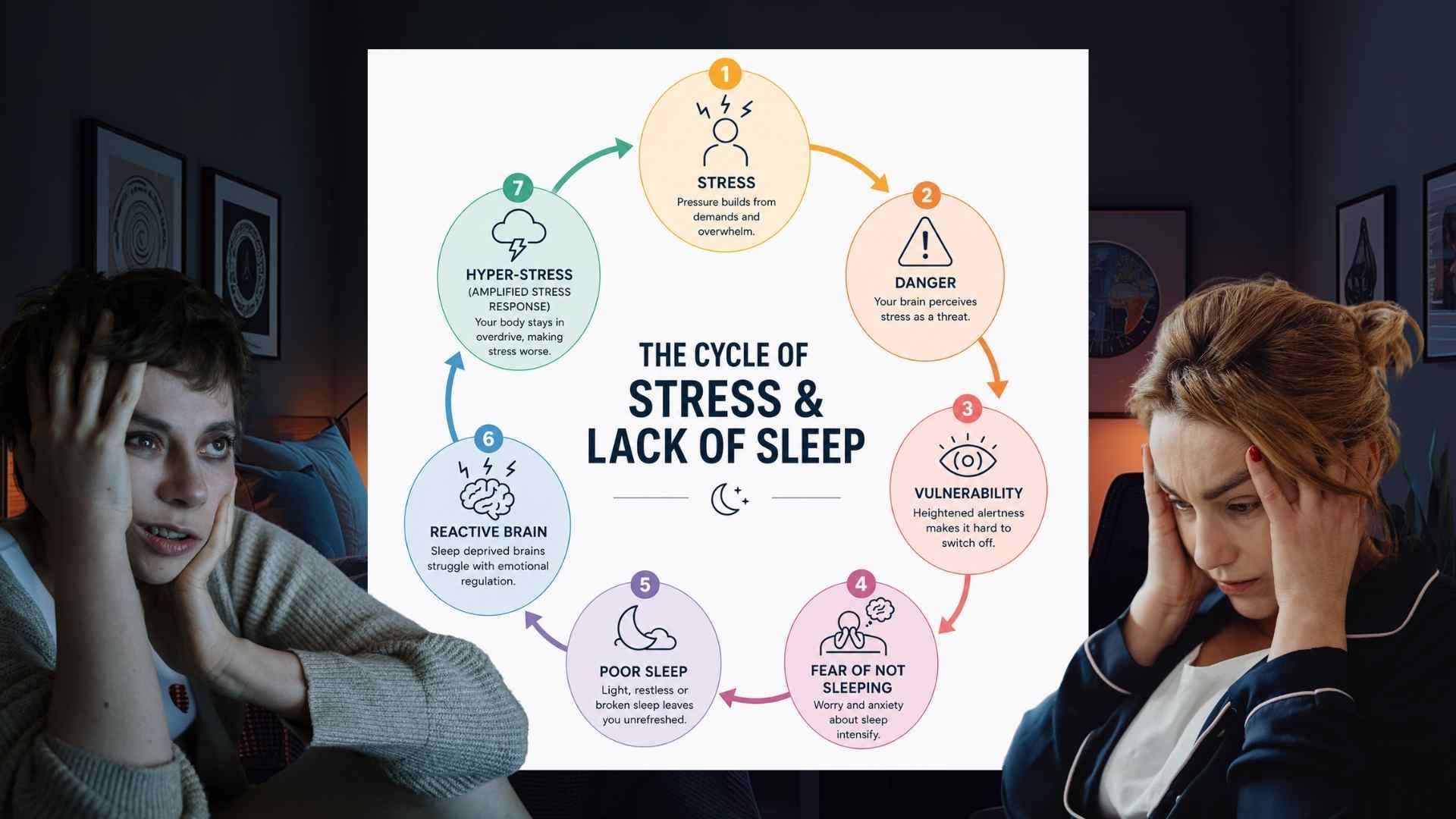
Stress causes your brain and body to stay switched on alert long after the working day ends. You might be in bed, but mentally you’re still processing your day, replying to emails, replaying conversations, planning tomorrow, or worrying about what you didn’t get done.
Then poor sleep makes the next day feel even harder.
Your emotions feel closer to the surface. Less patient. More overwhelmed. Less able to cope.
That’s the stress–sleep cycle.
Stress and sleep are deeply connected.
It’s not just:
“I’m stressed, so I can’t sleep.”
It’s also:
“I didn’t sleep, so everything feels more stressful.”
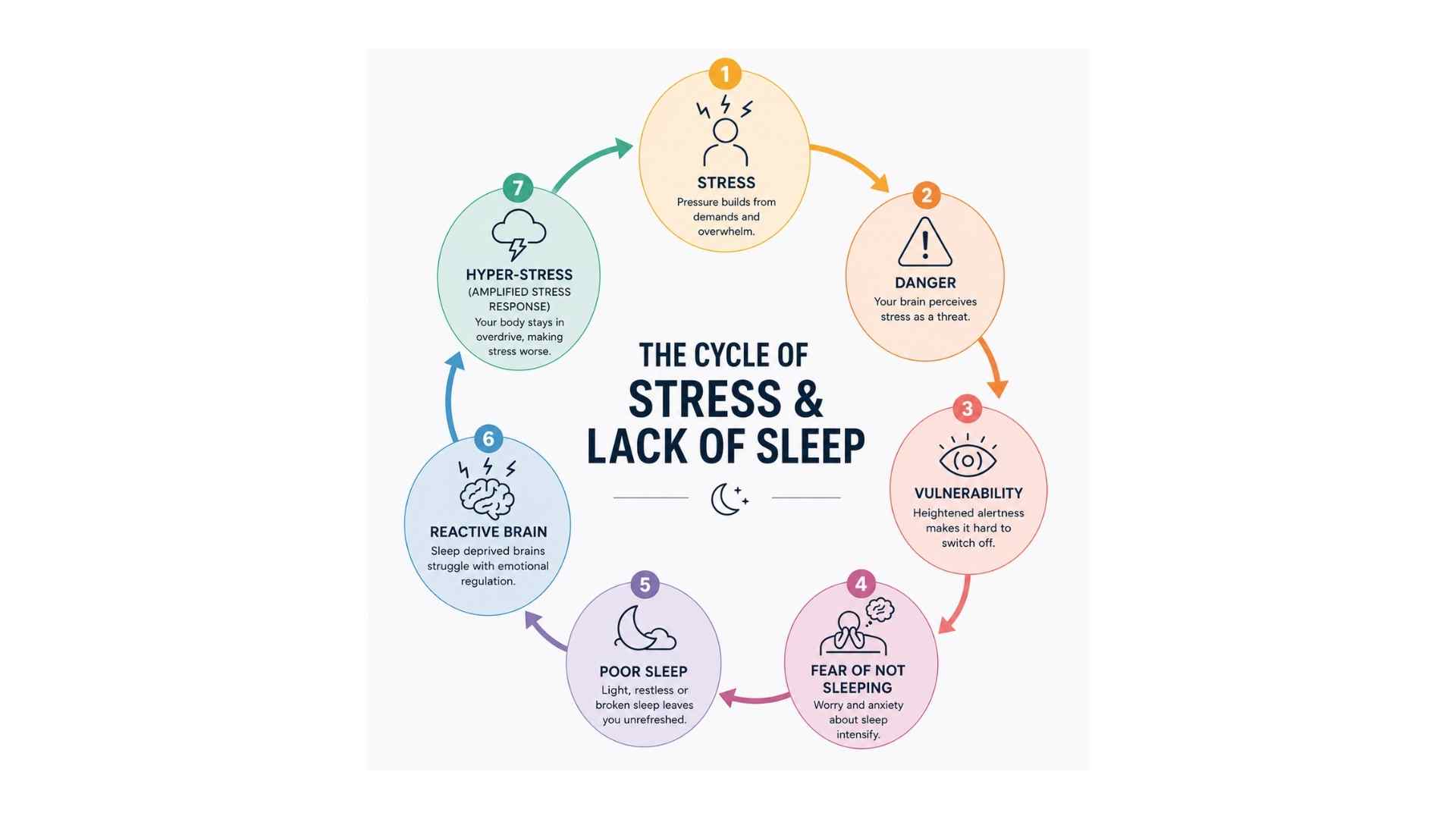
When you’re stressed, your body shifts into a hyperalert state. Stress hormones rise. Your mind becomes more vigilant. Your whole system stays on guard.
This response may help you get through the day, but it comes at a cost. Your body is working harder and harder to keep you going, increasing fatigue, overload and exhaustion.
Then, when night comes, your system doesn’t always know how to switch off.
But why does everything feels worse when you’re tired?
When we are sleep deprived, the calm, logical part of the brain - the frontal lobe - is too tired to step in and regulate our reactions properly.
Meanwhile, the emotional part of the brain - often called the “chimp brain”, or the amygdala - can go into overdrive.
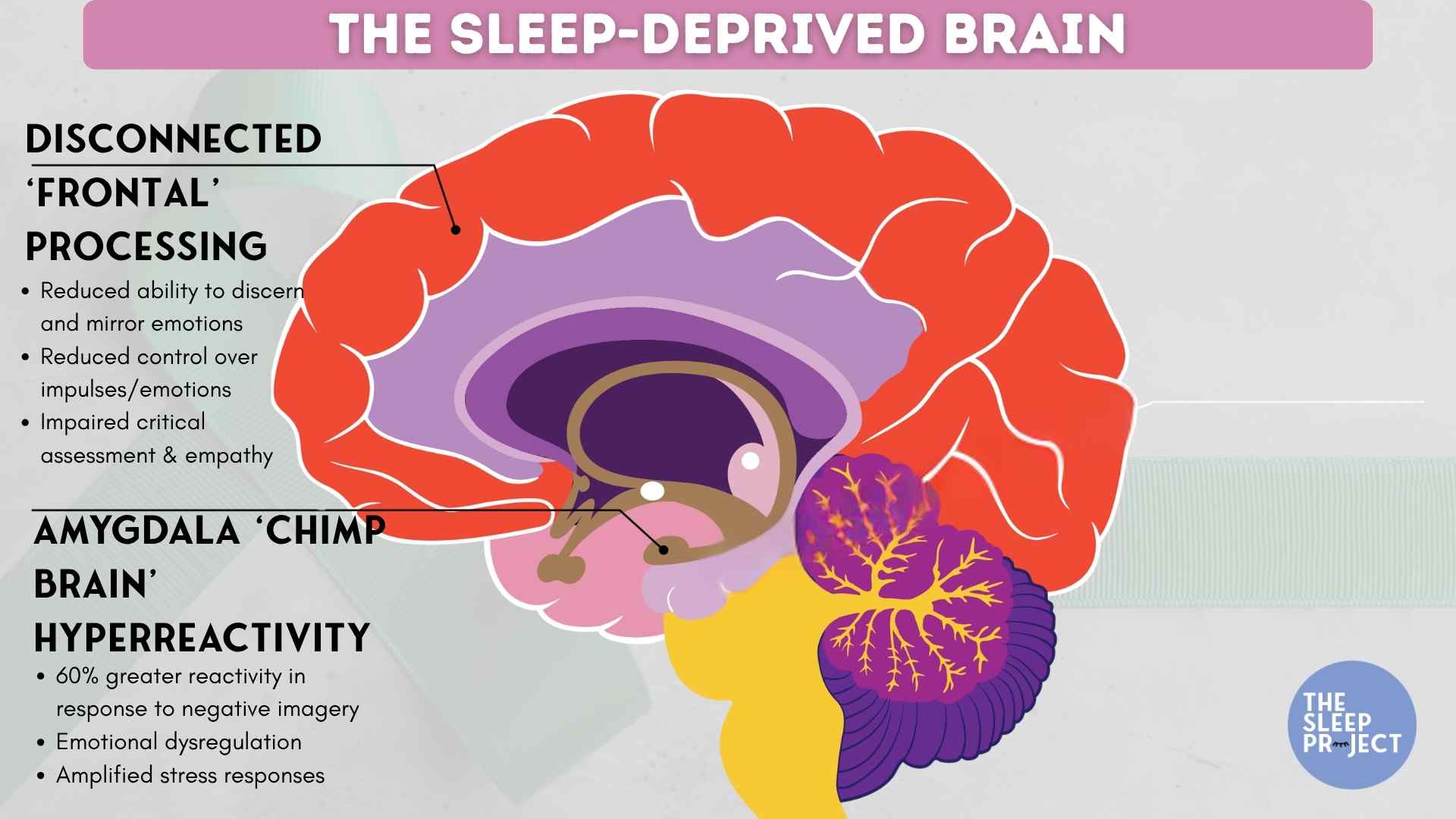
So instead of calmly responding to stress, you may find yourself:
-
snapping more easily
-
feeling overwhelmed by small things
-
worrying more
-
struggling to focus
-
feeling less resilient
-
lying awake even though you’re exhausted
This is not failure. It’s biology.
Your brain is prioritising the vital function – keeping you alive. And it cannot tell the difference between stress at work and a bear about to attack you. It needs to stay hyperalert, hypervigilant of danger.
But day by day, you feel more depleted.
And then, when you finally get the chance to rest, sleep won’t come when you need it most.
That’s one of the cruellest parts of insomnia and chronic stress.
But poor sleep can be treated. And when sleep improves, stress often feels more manageable too.
How to stop taking work stress to bed
You don’t need a perfect evening routine. You just need a few consistent cues that tell your brain the day is done.
1. Create a work-to-home ritual.
Change clothes, put your laptop away, make a drink, or sit quietly for five minutes. Mark the end of work clearly with a small ceremony – then don’t go back to your work emails or messages.
2. Do a worry log.
Write down what’s on your mind, what needs doing, and exactly when you’ll deal with it. Do this early in the evening, ideally as part of your work-to-home ritual. Your brain relaxes more easily when it knows there’s a plan.
3. Wind your body down.
Dim the lights, have a warm bath or shower, do some breathwork, or try a short meditation for sleep. Help your nervous system move from “on” to “safe to rest”.
4. Don’t problem-solve in bed.
If your brain starts trying to fix tomorrow, gently remind yourself: not now. Jot it down if needed, then come back to rest. Or get out of bed if sleep won't come. Never try to force sleep - it won't work.
If you’re stuck in the stress cycle and feel like you’ve tried everything, it may be time to pause.
Maybe the problem isn’t that you need to work harder, cope better or be more resilient. Maybe your sleep needs support.
Because we all know everything feels different after a good night’s sleep. And fixing sleep is often easier than people think.
CBT-I or sleep therapy help around 70–80% of people with insomnia. It is medication-free, side-effect free, and unlike sleeping tablets, it helps you sleep, feel and function better the next day.
Good sleep - and less stress - may be closer than you think.
If you’re ready to break the stress–sleep cycle, get in touch today. Or start our Retrain Your Sleep Programme, guaranteed to improve your sleep, or your money back.
Join our mailing list below to get exclusive early access to
free educational content, tools and other goodies!
We won't send spam. Unsubscribe any time.